The US pivot on regulating AI diffusion
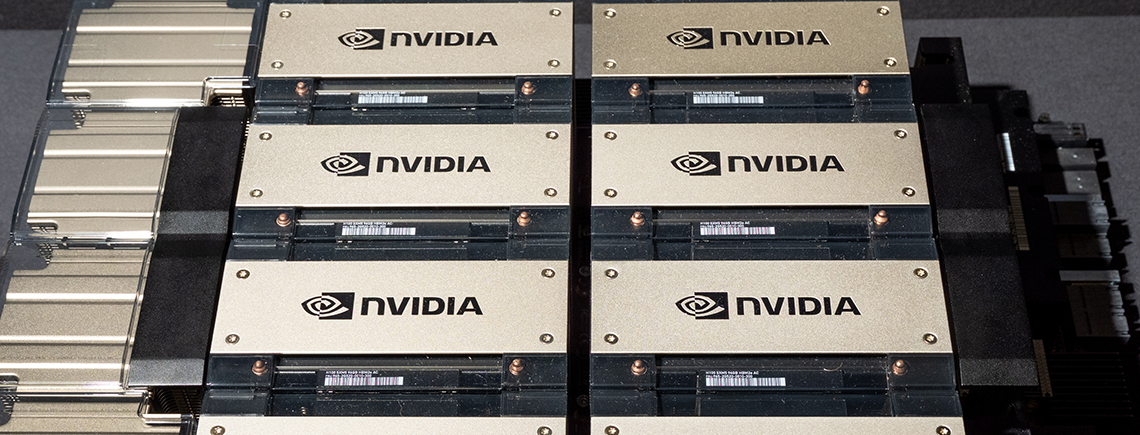
Does the Trump administration's temporary dropping of export restrictions on NVIDIA's H200 chips and the waiving of the 50% Rule for Chinese companies signal a pragmatic shift in U.S. policy or a short-sighted, hastily conceived decision?
In my latest Strategic Comments piece for the International Institute for Strategic Studies (IISS), I do a deep dive into the contrasts between the Biden and Trump approaches to AI Diffusion:
- Trump has pivoted US AI policy from restriction and denial to hyper-scaled diffusion, granting a one-year waiver (December 2025) allowing Chinese firms access to NVIDIA’s H200 chips. He rescinded Biden’s AI diffusion rules earlier in May.
- This marks a shift from Biden’s security-first, rules-based “small-yard, high-fence” framework to a transactional model, where export controls are now relaxed or tightened, case-by-case, to pursue commercial and geopolitical leverage.
- Biden’s framework aimed to preserve US technological advantage by denying China access to frontier chips, using a tiered system that tightly controlled diffusion and prioritised leakage prevention and allied coordination.
- Trump’s approach prioritises speed, scale, and market dominance over strict denial, reflecting a belief that maintaining a fixed technological lead is less important than shaping global diffusion and locking users into a US-centred AI stack.
- Allowing H200 exports represents a calculated acceptance of security risk, on the assumption that widespread adoption of US hardware and software will create longer-term dependence and crowd out Chinese alternatives, especially in tier 2 countries.
- The temporary granting of H200 access to Chinese firms also reflects close alignment between the White House and major US tech firms, with policy increasingly shaped through private consultations rather than civil-service processes or congressional oversight.
- China’s response complicates this strategy, as Beijing continues to push semiconductor self-reliance through Huawei’s Ascend ecosystem while remaining cautious about deepening reliance on US chips.
- Huawei’s resurgence underscores the limits of chokepoint controls, showing that sanctions can slow but not stop indigenous capability development or exports to emerging markets. But how much progress, really, has Huawei made with its Ascend Chips?
- The H200 waiver carries real trade-offs, as advanced chips and memory capacity diverted to China reduce supply available to US and allied firms, while also enabling China to scale more powerful AI clusters and compete with the U.S. tech stack globally.
Meanwhile, the U.S. export controls regime figures to be revamped.
US policy on AI diffusion is now highly fluid and politically contested. China-hawks are not happy (Dems and Repubs). This is far from settled. Expect more policy U-Turns.